 Knygos.lt nariams
 Knygos.lt nariams
- Turime sandėlyje


/images/books/16139866/1782806208_virselis_1.png)
/images/books/16139866/1782806202_virselis_1.png)
/images/books/16139866/1782806211_virselis_2.png)
- Autorius: Ričardas Kalytis
- Leidėjas: Kacer Publishing House
- Metai: 2022
- Puslapiai: 408
- ISBN: 9786099630403
- Formatas: 14,8 x 21,6 x 3,6 cm, kieti viršeliai
- Kalba: Anglų
- Vertėjas: Deimantė Valiukonytė
Atsiliepimai
Aprašymas
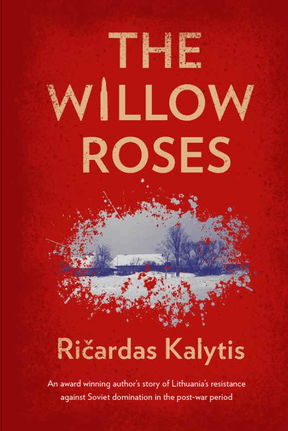
'The Willow Roses' is a true-fact based story depicting Lithuania's resistance against Soviet domination in post war period.
The narrative develops in Lithuanian village of Ažugiriai where people noticed willows 'blooming with red roses' in the winter right after World War II. Originally, it is a natural phenomenon when leaves of willows left hanging on the branches in the winter become red and shrunk and reminiscent of roses. In Lithuania, it is believed that this incredible natural creature prophesies a tragedy, blood and death.
The prophecy came true when the terrible machine of Soviet terrorism unfolded all its beauty in post-war Lithuania and the politicians of the time did not manage to resist it, leaving citizens to deal with the situation on their own.
The author, however, does not go deep into historical analysis. Instead, he reveals the emotions and dramatic experience of people, who had to take fatal decisions and withstand their outcome, to choose between their believes and keeping themselves and their families safe, to die or to obey.
Ričardas Kalytis: a Lithuanian writer, who lived through the resistance struggles and the exile to Siberia in person. Ričardas was born in 1932 and was sent to Siberia together with his mother in 1949, where he spent all his youth and came back to Lithuania only in 1961. Possessing a technical doctor's degree and being praised for his scientific inventions and managerial work, he is also a prominent and award-winning author of historical novels.
'The Willow Roses' is his third novel, originally published in 1997. Before it, came 'Ours, not songs', time' (1992) and 'The place of cry' (1995), with the latter being awarded a National Literature Award Žemaitė Prize. A bit latter he wrote 'The times of dogsbodies'. All four literary pieces depict lives of people in historically significant moments transferring global conflicts to individual levels and showing off their dramatism through experiences, emotions, and fates of ordinary people.
All novels are full of cultural symbolism, house holding habits and linguistics particularities of the beginning of the 20th century Lithuania, subtle humour being an indispensable spice even in the most tragic situations.
***
„Karklų rožės“ – Ričardo Kalyčio, aukštaičių rašytojo, Žemaitės literatūros premijos laureato, knyga apie tragišką pokario metą, atskleidžianti jausmus, kuriuos teko išgyventi pačiam autoriui, būnant knygoje aprašomų įvykių dalyviu ir liudytoju.
Romane vaizduojama Aukštaitijos Ažugirių kaimo tragedija, anot autoriaus, išpranašauta viduržiemy rožes primenančiais nuraudusių lapų liežuviais besiplaiksčiusių karklų. Kaimo nesudegino gyvo, jis mirė skaudžiai išniekintas, pažemintas ir parklupdytas. Žmonės neįstengė jo apginti, likę vieni prieš baisią sovietų mašiną.
Atrodytų, ką naujo dar galima pasakyti apie pokario partizanų kovas? Šis Ričardo Kalyčio romanas išsiskiria jausmingumu, dėmesiu žmogaus emocijoms, vidiniams konfliktams, pasirinkimams ir dramatizmui, kurį tragiškais pokario metais teko išgyventi paprastiems kaimo žmonėms. Kaip ir visoje Ričardo Kalyčio kūryboje, romane gausu kultūrinio simbolizmo, buities realijų ir subtilaus humoro, būdingo XX a. pradžios Lietuvai.
Knyga „Karklų rožės“ lietuvių kalba išleista 1997 m. Tai trečiasis Ričardo Kalyčio romanas. 1992 m. išleista „Mūsų – ne dainų metas“, 1995 m. – „Verksmo vieta: vaizdai iš mūsų vaikystės sodžiaus“, už kurį autorius ir buvo apdovanotas Žemaitės premija, 2002 m. – „Juodnugarių laikai“.


- Autorius: Ričardas Kalytis
- Leidėjas: Kacer Publishing House
- Metai: 2022
- Puslapiai: 408
- ISBN: 9786099630403
- Formatas: 14,8 x 21,6 x 3,6 cm, kieti viršeliai
- Kalba: Anglų
- Vertėjas: Deimantė Valiukonytė
'The Willow Roses' is a true-fact based story depicting Lithuania's resistance against Soviet domination in post war period.
The narrative develops in Lithuanian village of Ažugiriai where people noticed willows 'blooming with red roses' in the winter right after World War II. Originally, it is a natural phenomenon when leaves of willows left hanging on the branches in the winter become red and shrunk and reminiscent of roses. In Lithuania, it is believed that this incredible natural creature prophesies a tragedy, blood and death.
The prophecy came true when the terrible machine of Soviet terrorism unfolded all its beauty in post-war Lithuania and the politicians of the time did not manage to resist it, leaving citizens to deal with the situation on their own.
The author, however, does not go deep into historical analysis. Instead, he reveals the emotions and dramatic experience of people, who had to take fatal decisions and withstand their outcome, to choose between their believes and keeping themselves and their families safe, to die or to obey.
Ričardas Kalytis: a Lithuanian writer, who lived through the resistance struggles and the exile to Siberia in person. Ričardas was born in 1932 and was sent to Siberia together with his mother in 1949, where he spent all his youth and came back to Lithuania only in 1961. Possessing a technical doctor's degree and being praised for his scientific inventions and managerial work, he is also a prominent and award-winning author of historical novels.
'The Willow Roses' is his third novel, originally published in 1997. Before it, came 'Ours, not songs', time' (1992) and 'The place of cry' (1995), with the latter being awarded a National Literature Award Žemaitė Prize. A bit latter he wrote 'The times of dogsbodies'. All four literary pieces depict lives of people in historically significant moments transferring global conflicts to individual levels and showing off their dramatism through experiences, emotions, and fates of ordinary people.
All novels are full of cultural symbolism, house holding habits and linguistics particularities of the beginning of the 20th century Lithuania, subtle humour being an indispensable spice even in the most tragic situations.
***
„Karklų rožės“ – Ričardo Kalyčio, aukštaičių rašytojo, Žemaitės literatūros premijos laureato, knyga apie tragišką pokario metą, atskleidžianti jausmus, kuriuos teko išgyventi pačiam autoriui, būnant knygoje aprašomų įvykių dalyviu ir liudytoju.
Romane vaizduojama Aukštaitijos Ažugirių kaimo tragedija, anot autoriaus, išpranašauta viduržiemy rožes primenančiais nuraudusių lapų liežuviais besiplaiksčiusių karklų. Kaimo nesudegino gyvo, jis mirė skaudžiai išniekintas, pažemintas ir parklupdytas. Žmonės neįstengė jo apginti, likę vieni prieš baisią sovietų mašiną.
Atrodytų, ką naujo dar galima pasakyti apie pokario partizanų kovas? Šis Ričardo Kalyčio romanas išsiskiria jausmingumu, dėmesiu žmogaus emocijoms, vidiniams konfliktams, pasirinkimams ir dramatizmui, kurį tragiškais pokario metais teko išgyventi paprastiems kaimo žmonėms. Kaip ir visoje Ričardo Kalyčio kūryboje, romane gausu kultūrinio simbolizmo, buities realijų ir subtilaus humoro, būdingo XX a. pradžios Lietuvai.
Knyga „Karklų rožės“ lietuvių kalba išleista 1997 m. Tai trečiasis Ričardo Kalyčio romanas. 1992 m. išleista „Mūsų – ne dainų metas“, 1995 m. – „Verksmo vieta: vaizdai iš mūsų vaikystės sodžiaus“, už kurį autorius ir buvo apdovanotas Žemaitės premija, 2002 m. – „Juodnugarių laikai“.
Atsiliepimai